~/work/turyya
Turyya: a baby-care store that teaches new mothers before it sells
A Shopify store for an Ayurveda-rooted baby-care brand whose buyers are first-time mothers: education is part of the purchase path, so every product answers 'what is this for and how do I use it' before it asks for the sale.
- client
- Turyya
- year
- 2026
- duration
- —
- role
- Shopify developer, UX & content structure (freelance)

first-time mothers
audience
6
shop categories
4.93★
verified review rating
Shopify
platform
Challenge
Turyya makes boutique baby-care products rooted in Ayurvedic practice: handmade in small batches, organic and non-toxic. Muslin swaddles and towels, bibs and burp cloths, handmade toys, travel essentials, and care products such as a colic-relief roll-on, a warm healing pillow and a diaper-rash cream.
The people buying are mostly new mothers who have just had a baby. They are exhausted, anxious and learning everything at once. Many have never heard of an ajwain potli or don't know why a muslin swaddle is better than a towel, or what to do when the baby cries every evening.
That changed the problem. A product grid was not enough. A mother will not buy a colic roll-on if she doesn't yet know that the evening crying is colic, so the store had to teach first and sell second, without turning into a lecture or a medical site.
Approach
Shop by need, not by SKU
Navigation follows what a new mother is dealing with, not the catalogue: Gift Bundles, Baby Travel essentials, Baby Care, Muslin Sheets & Blankets, Bibs & Burp Cloths, Handmade toys. Care products sit together under Baby Care, with bundles such as the Newborn Care Bundle (for colic, diaper rash and more) that solve a whole problem in one purchase.
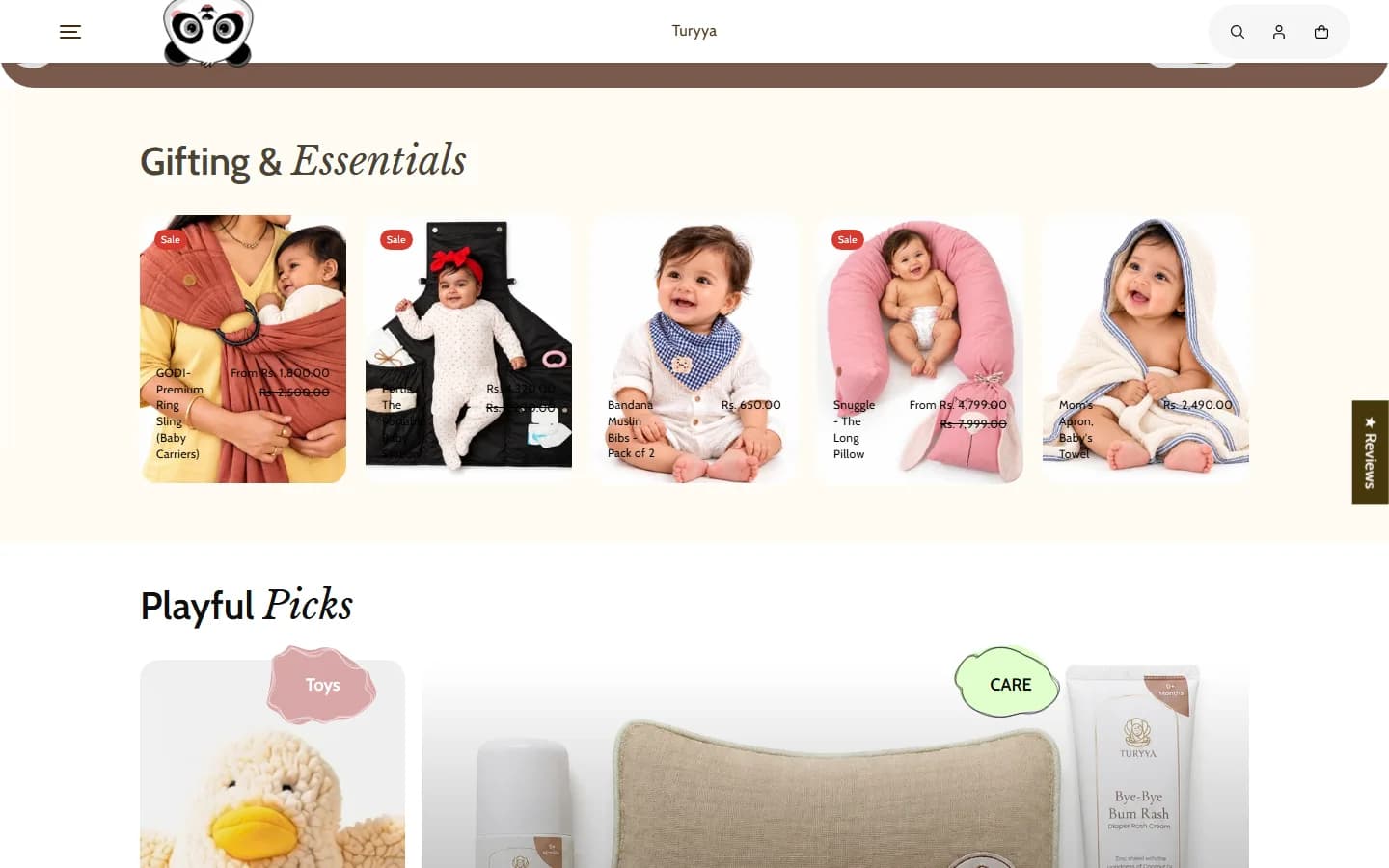
Teach inside the store
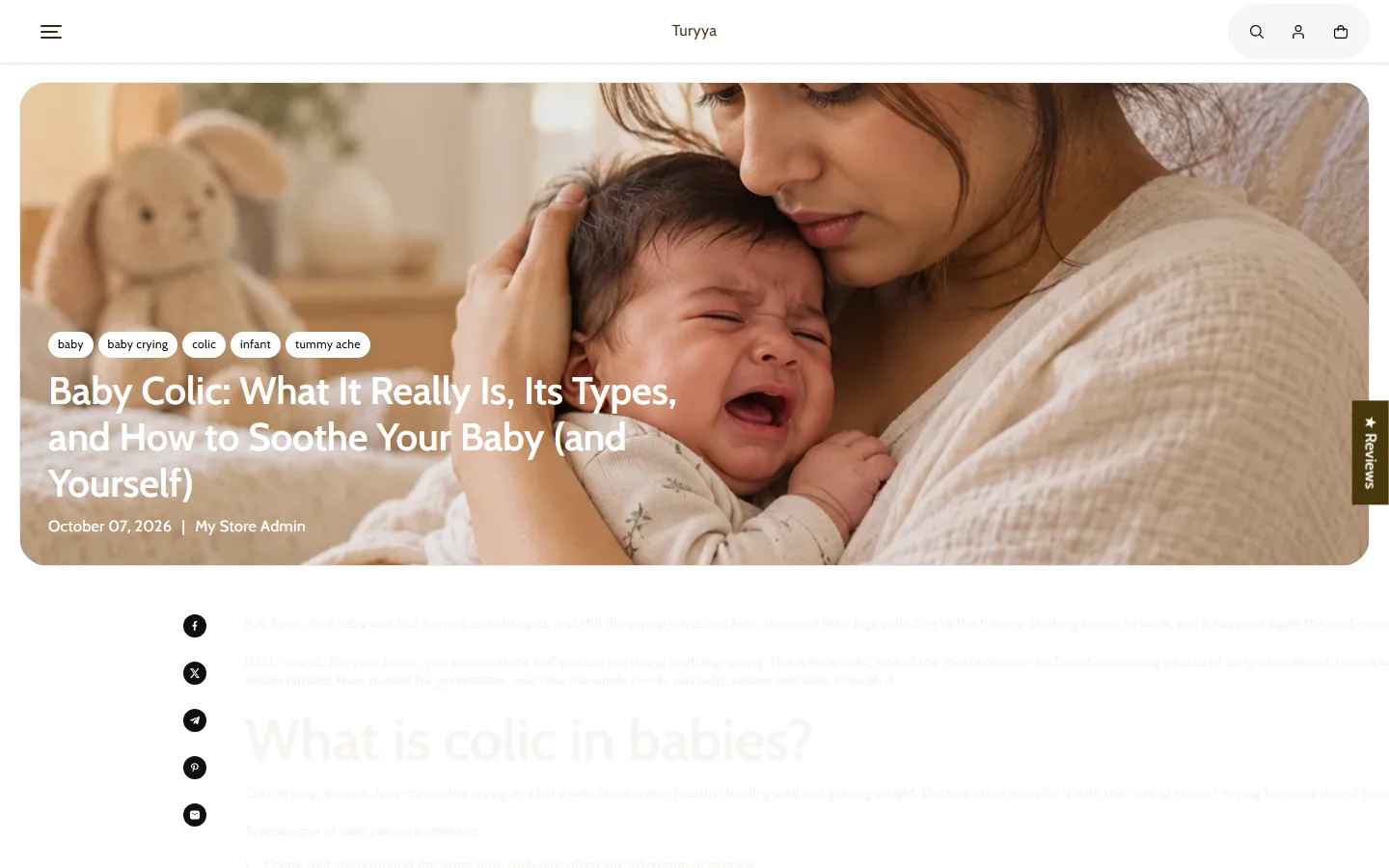
- The Turyya Journal lives on the home page, not hidden in a footer link: plain-language guides to the moments that worry new parents (baby colic and how to soothe it, safe sleep and SIDS, baby blues versus postpartum depression). Each guide explains the problem first, then where a product genuinely helps.
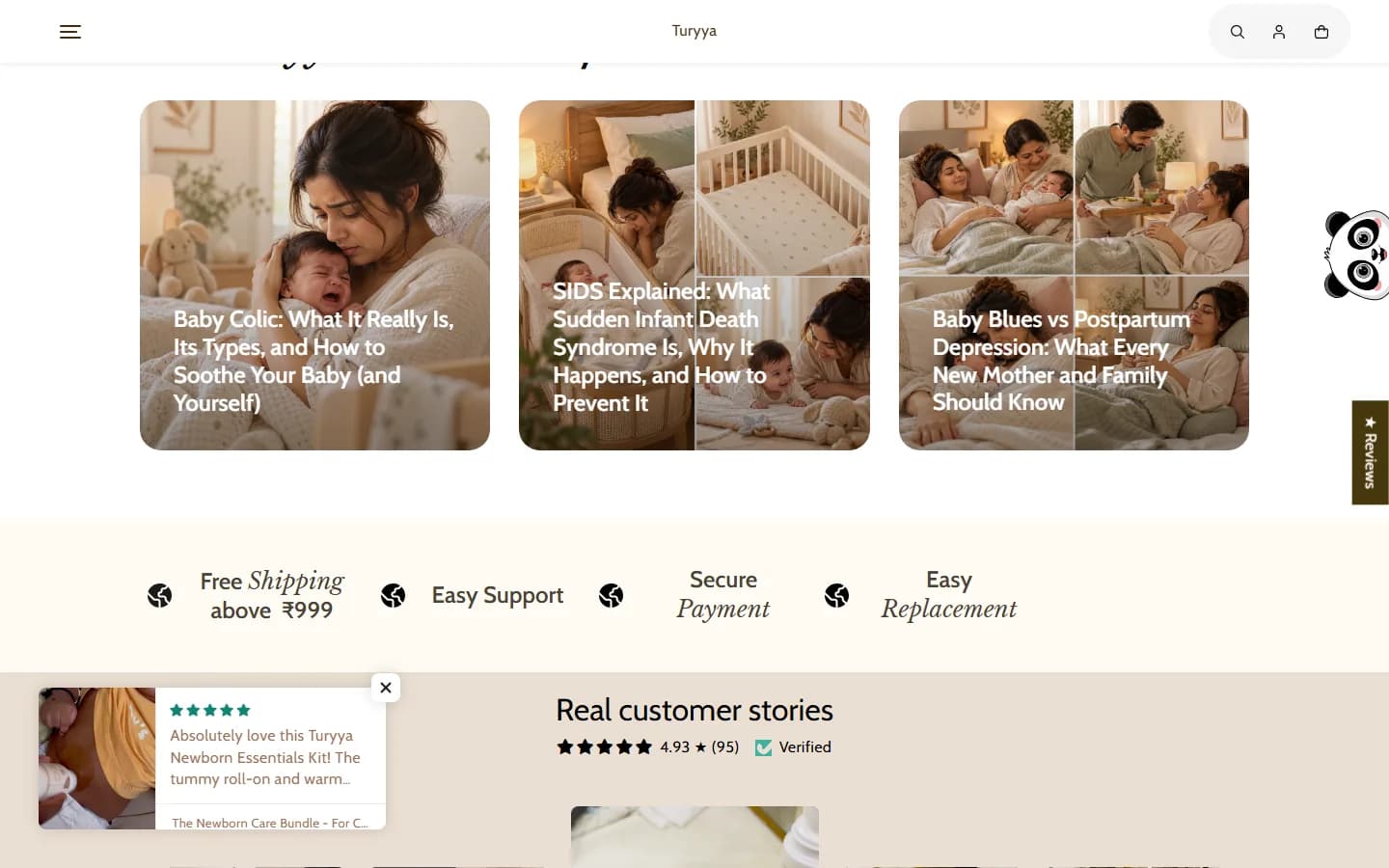
- Articles are written for a tired reader on a phone: a relatable opening, short sections, clear headings and tags (colic, infant, tummy ache) that connect back to the relevant products.
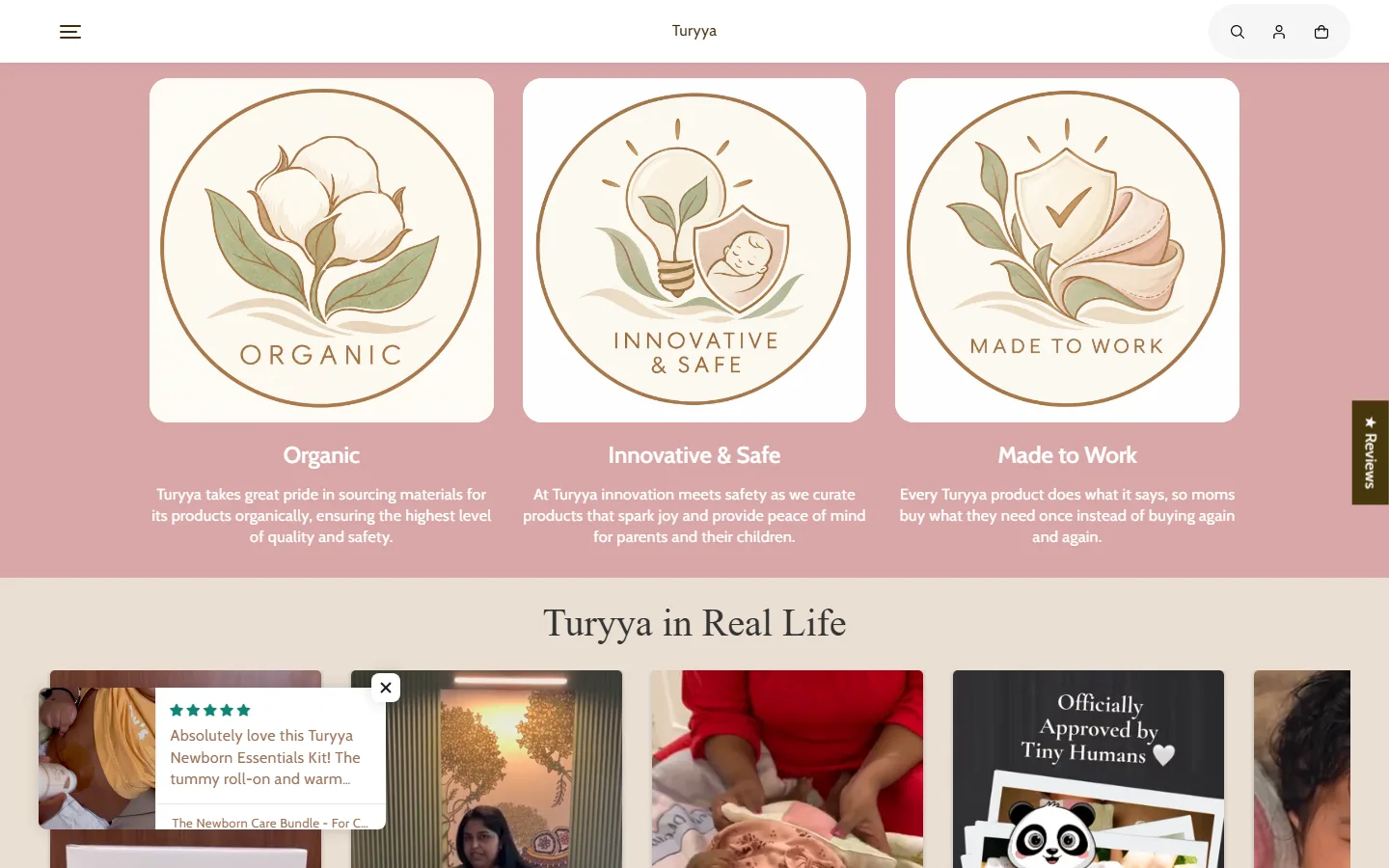
- Values as reassurance, not decoration. Organic, Innovative & Safe and Made to Work each carry one line that answers a mother's real worry: is it safe for my baby's skin, and will it actually work, so I don't buy it twice?
Trust before the sale
- Real-life proof: a "Turyya in Real Life" strip of customer photos and videos, and verified reviews (4.93★ across 95 reviews at the time of writing), so a hesitant first-time buyer sees other mothers using the product.
- Remove the last objections near the decision: free shipping above ₹999, easy support, secure payment and easy replacement, plus 10% off a first order for signing up.
Mobile first
Most of this audience shops one-handed at odd hours, so the store is designed for the phone first: a single-column flow, large tap targets, and the shop, search, account and cart always reachable.

What shipped
- A Shopify storefront on a customised theme, with collections organised by need and bundles for common newborn problems.
- The Turyya Journal on Shopify's blog engine, surfaced on the home page and linked to products.
- Review and user-generated-content blocks, trust badges and a first-order signup offer.
- A mobile-first layout across home, collection, product and article pages.

Results
The store is live at turyya.com. It sells by explaining: a mother can arrive knowing nothing about colic or muslin, read a short guide, see other mothers' reviews and leave with the product that solves the problem in front of her.
What I'd do differently
Connect the journal to the catalogue with structured links (each article declaring the products it covers) so related products render automatically on every guide, instead of being placed by hand.
More case studies
// need something similar?
Let's talk about your system.
A 15-minute call is enough to tell you whether I can help and roughly what it takes.